Your skates are laced, the rental line is behind you, and the ice is right there — a wide, bright sheet of it, crowded with people who all appear to know exactly what they're doing. Most of them don't. What they do know is a handful of unwritten rules that keep a busy public session from turning into a demolition derby, and every one of those rules is easy to learn before you step through the gate.
Rink etiquette isn't about formality. It's about predictability: moving in ways other skaters can read, leaving room for other people's mistakes, and treating a shared surface the way you'd treat a shared road. Here's what to know before your first lap.
Check the Session Before You Check In
Not every ice slot is the same. A public skate, a family session, a freestyle session for figure skaters and a stick-and-puck session run on completely different rhythms, and wandering onto the wrong one is the most common first-timer mistake. Freestyle ice in particular is working time for skaters running programmes and jumps — it is not the place for a casual first glide.
A few things worth confirming at the door:
- The session type and end time. Rinks clear the ice between sessions, sometimes with a Zamboni, sometimes with a whistle. Know when you'll be asked to leave.
- The direction of travel. Most rinks post one, and most default to counter-clockwise, but it varies. Look for arrows on the boards or ask at the counter.
- Where the gates are. Use them. Climbing over the boards is how people tear jackets and bruise shins.
- Whether helmets are required for children, and whether rental skates need to be returned to a specific rack.
If there's a rink attendant or skate guard on duty, that person is your best source of information. Ask which side beginners tend to use. Staff would rather answer three questions at the start than peel someone off the ice mid-session.
Read the Traffic Pattern
Public ice develops lanes whether or not anyone paints them. The general pattern at most rinks puts faster, more confident skaters in an outer band and beginners, families and anyone practising in the middle or along one side. Some rinks split the surface with cones; follow whatever layout is in front of you rather than inventing your own.
Staying in your lane
Pick a line and hold it. Drifting from the boards to the centre and back again forces everyone behind you to guess, and guessing at speed is how collisions happen. If you want to practise stopping or turning, find a quiet patch near the edge, look over your shoulder first, and keep your practice short so you're not occupying the same corner for half an hour.
Don't stop in the flow
The single most disruptive thing a new skater can do is stop dead in the middle of moving traffic to talk, adjust a lace, or check a phone. If you need to pause, glide to the boards, hold on, and stay there. Same with groups: two people skating side by side and chatting is fine; five people linking arms across the width of the rink is a roadblock.
Share the Space Like You'd Share a Road
Look before you turn. Look before you stop. Look before you push off from the boards, because someone may be passing exactly where you're about to launch. A quick glance over the shoulder costs nothing and prevents most of the collisions that happen at public sessions.
When passing, go around rather than through. Don't weave between beginners, don't cut close in front of someone who is clearly wobbling, and don't grab another skater to steady yourself without asking. If someone falls in front of you, slow down, give them a metre, and let them get up — stopping directly behind a fallen skater creates a pile-up.
Phones stay in pockets or lockers. Taking a call while skating, filming your friends mid-flow, or stopping to scroll is genuinely risky on crowded ice. If you want photos, take them from behind the boards.
Rule of thumb: skate as if everyone around you is about to do something slightly unexpected — because on a public session, someone always is.
Dress for Cold Ice and Warm Buildings
Rinks are cold at the surface and often warm in the stands, so layers work better than one heavy coat. You want to be able to shed a jacket after fifteen minutes and put it back on when you slow down. Gym wear or soft trousers are fine; denim gets stiff and stays cold if you fall and the ice is damp.
Three details matter more than people expect. Gloves, because bare hands on cold boards and cold ice are miserable and because they protect your palms if you go down. Thin socks, because thick ones bunch up and reduce control. And nothing long and loose that can trail — an unwrapped scarf, a long coat hem or a bag strap is something to trip over or catch on a blade.
A helmet is worth considering for a first session, and it's a sensible default for children. Wrist guards are common among beginners too. This is general advice rather than medical guidance; if you have an injury, a balance condition or any doubt about your readiness to skate, speak to a qualified professional first.
Falling Is Part of the Deal
Everyone falls. The skill isn't avoiding it, it's doing it without hurting yourself or anyone else. Bend your knees for balance, and if you feel yourself going, try to drop to one side and let your backside take it rather than falling backward onto your hands or straight onto your tailbone.
Getting up: roll onto your hands and knees, bring one skate flat to the ice under you, and push up from there. Check for traffic before you stand — the ice above you is still moving. If you're hurt, stay put and wave; someone will come, and staff are used to it. If you're fine, get up quickly and clear the area so the next person doesn't have to swerve.
Small Courtesies That Matter
Apologise if you bump someone, even when it wasn't your fault. Don't coach strangers, and don't offer unsolicited technique advice unless someone asks. If a child falls nearby and their parent isn't close, ask before you help. Return rental skates on time and don't leave boots and bags spread across a bench that other people need.
One more: don't blame the ice, the skates or the crowd for a wobble. Everyone had a first session. The people gliding past you so easily spent their first hour hugging the boards too.
Your First Session, Practically
Arrive about half an hour before your session so lacing and rental don't eat into your ice time. Skate the first few laps near the boards, in the direction of travel, before you try anything ambitious. Keep your first visit short — an hour is plenty, and tired legs make sloppy skaters.
Then get off the ice, drink something warm, and book the next one. Etiquette gets easier the moment the movement stops feeling new, and by your third visit you'll be the one giving a nervous beginner a bit of extra room without even thinking about it.
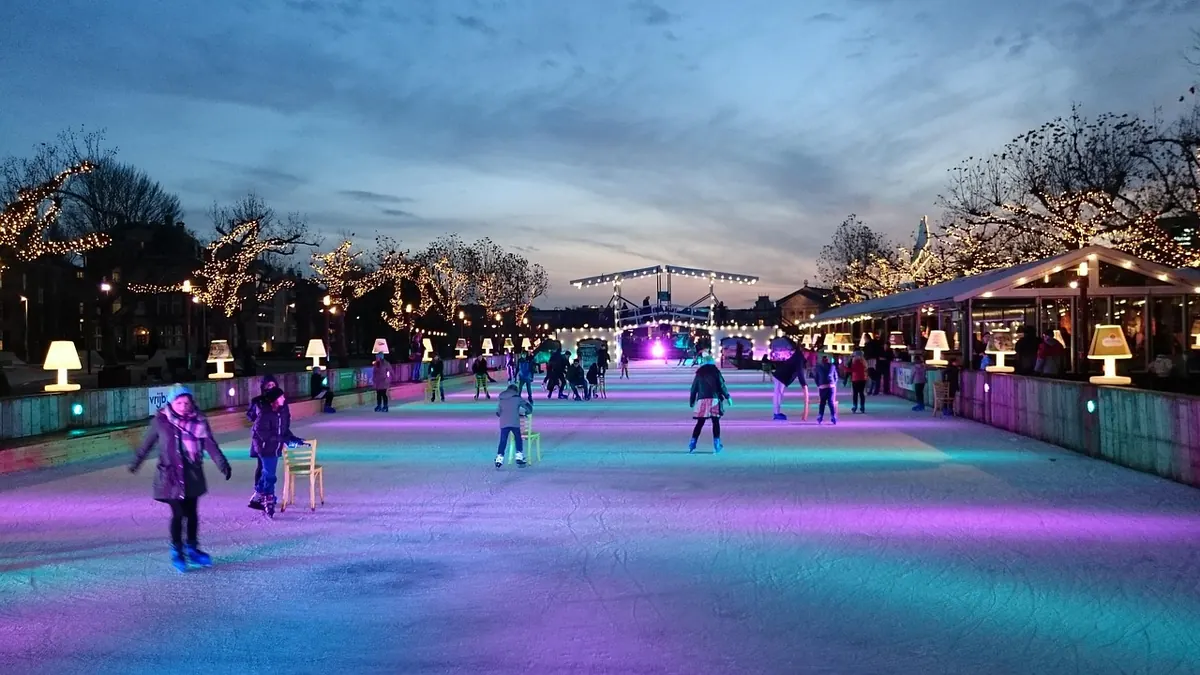
Photo: almadin02 / Pixabay