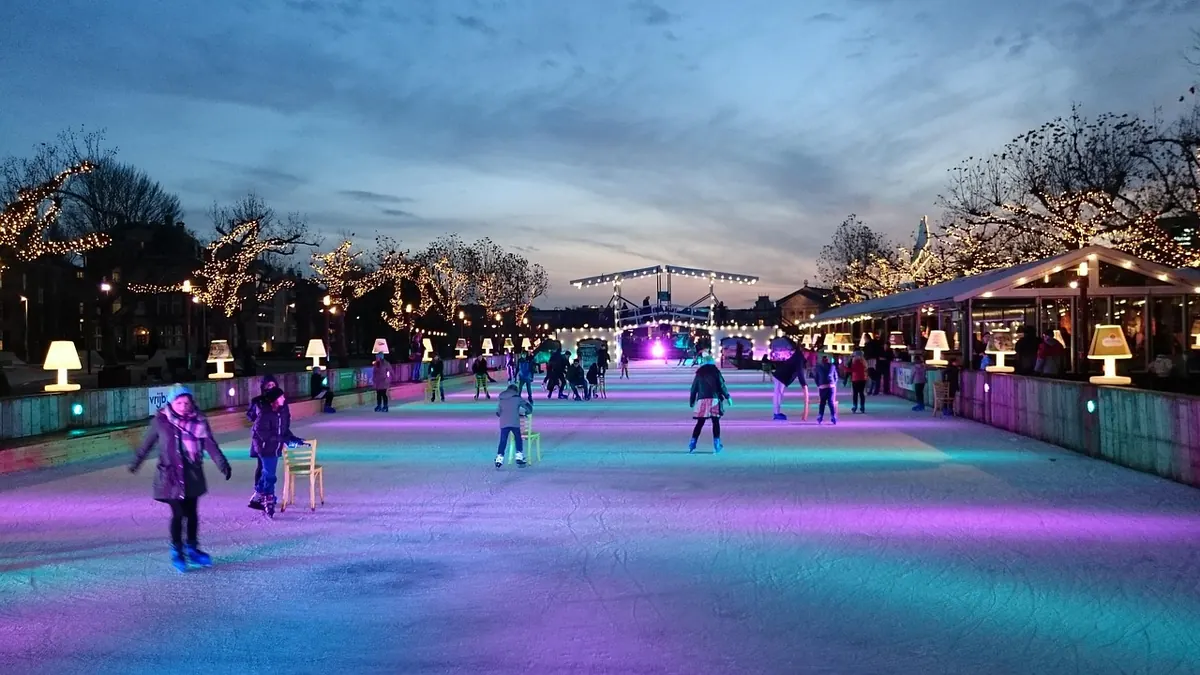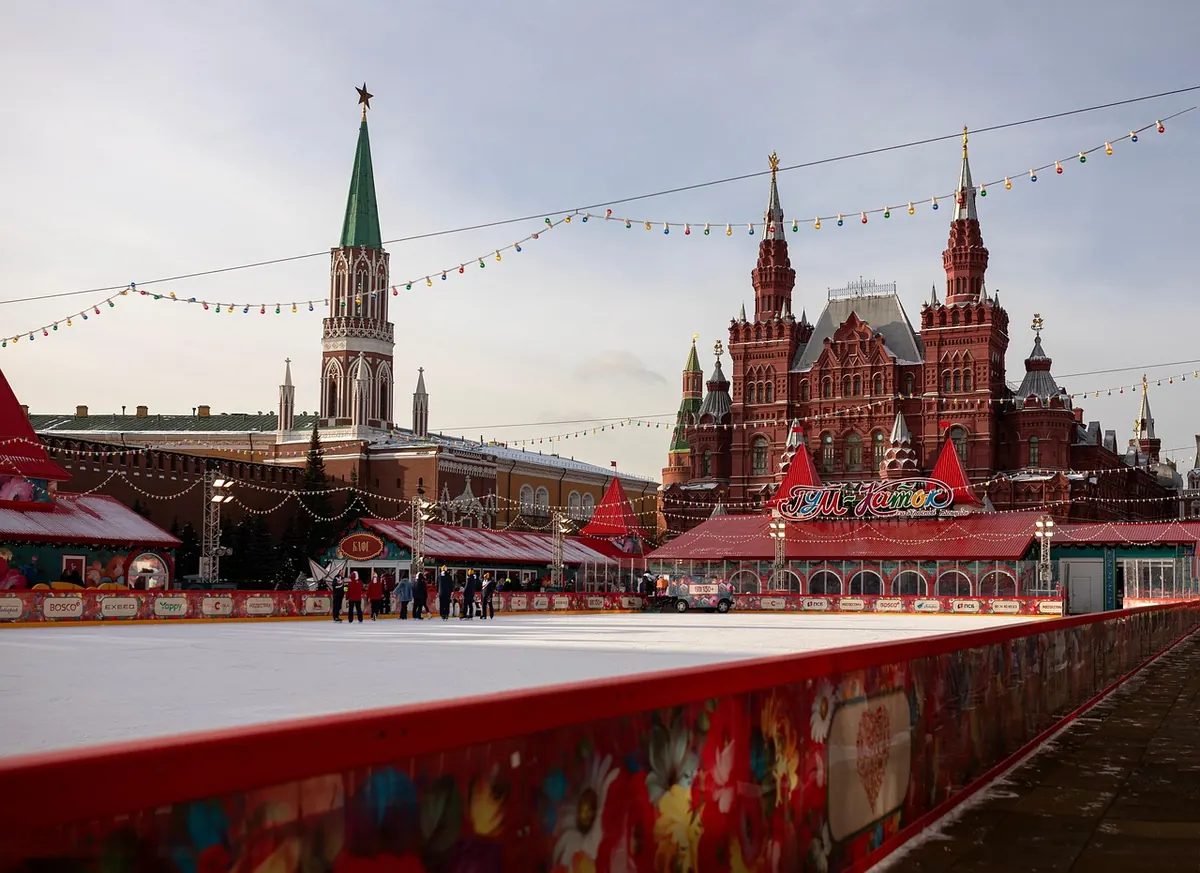
The first hard freeze turns every pond, canal and flooded tennis court in the city into a temptation. Someone is always first to lace up, and their tracks in the snow make the ice look far more inviting than it may actually be. Outdoor skating is one of the cheapest, strangest pleasures a cold city offers — a rink that appears and disappears without a schedule, a sheet of water you can suddenly stand on.
It also rewards people who do a little homework. Most outdoor skating accidents come from assumption rather than recklessness: that a cold week was long enough, that a green flag means perfect ice, that the surface near the bridge must be as solid as the surface in the middle. Run this checklist twice — once at home, once at the edge of the ice.
Before You Leave the House
In most cold-weather cities, someone official is already paying attention: a parks department, a canal authority, a rink operator. Many post a daily status online or fly a flag at the entrance. Start there — then ask what "open" actually means. On a managed rink it usually means measured and patrolled. On a pond it sometimes means nothing more than "not closed."
Weather history matters more than the current temperature. Ice is built by sustained cold, not one sharp night, and a mild afternoon after a cold snap can soften the top layer and refreeze it into a shell that looks fine from the bank. Look back five days, not out the window.
Then pack. A short list that covers almost everything:
- Skates that fit snugly, laced firm enough to hold the ankle upright
- A helmet — non-negotiable for children and beginners, wise for everyone
- Wool or synthetic layers, plus spare mittens and socks in a dry bag
- A small towel and a plastic bag for wet kit afterwards
- Phone charged, carried in an inside pocket so the battery stays warm
- Ice picks on a cord around your neck, if you skate anything unmaintained
- A length of rope or a throw bag, if you own one
Finally, tell someone. A text with the location and the time you expect to be back costs ten seconds. If you are heading onto unmaintained ice alone, don't — wait for company or stay home.
How to Read Ice You Didn't Make Yourself
Managed ice versus wild ice
A refrigerated city rink with boards, a resurfacer and a person who checks it nightly is a completely different proposition from a pond in the park. Both are worth your afternoon. Only one has somebody accountable for thickness. Know which one you are stepping onto.
Signs to take seriously
- Grey, milky or dark patches, and any slush sitting on top
- Cracks that are wet, or that widen while you watch
- Pressure ridges, and ice heaved up in slabs
- Open water or dark, thin ice near inflows, outflows, culverts and storm drains
- Ice under bridges, beside pilings, or anywhere a river or canal carries current
- Snow-covered ice on moving water — the snow hides everything underneath
- A surface that flexes or ripples with each step
What about thickness?
Public guidance in many cold countries settles at roughly 10 cm (four inches) of clear, solid ice for a group of skaters, with considerably more for snowmobiles and vehicles, but local rules vary and only an actual measurement tells you anything. Clear "black" ice is stronger than white, aerated ice of the same depth. Thickness is also only one variable: current, water depth, snow cover and the freeze-thaw history all change the answer.
If nobody has measured it, you don't know what you're standing on.
Layers That Work and Layers That Betray You
Three layers, in this order: a base that wicks (wool or synthetic), a mid that insulates (fleece, a thin down vest), and a shell that blocks wind. Cotton against the skin is the classic beginner's mistake — it holds sweat, then chills you the moment you slow down.
Head, hands, feet
- Mittens beat gloves for warmth; add thin liners if you need dexterity for laces
- A hat that covers the ears, and a buff around the neck
- One pair of thin wool socks, snug. Two pairs bunch up and cut circulation
- Skates with the heel locked down. Loose skates roll your ankles outward and make every stride a negotiation
The goal is to be slightly cool standing on the bank. You will warm up within five minutes of skating; if you are sweating on the walk over, shed a layer before you lace up. Sweat is what gets you cold later.
Watch for the cold's early warnings: numb fingers, white waxy skin, uncontrollable shivering. Those are signals to go inside and warm up slowly. Frostbite and hypothermia are medical situations — if shivering will not stop, or someone seems confused or drowsy, call emergency services and take professional advice rather than guessing.
Emergency Prep: The Five Minutes That Pay Off
People who fall through cold water are usually out within a couple of minutes, either by their own effort or with help from someone standing nearby. That is the window you are preparing for.
- Never skate alone on unmaintained ice.
- Keep the phone in an inside pocket — cold drains batteries fast, and a phone at five percent on the ice is a phone that dies.
- Carry ice picks on a cord around your neck, not buried in a backpack.
- Note your exits before you start: ladders, docks, shallow banks, stairs.
- Bring a rope or throw bag if you have one, and learn how to throw it accurately.
If you go through
Do not try to stand up in the water. Get your forearms onto the surface, kick hard, and work your way horizontal before sliding forward. Crawl or roll away from the hole rather than standing and walking. Leave the bag. Get to warmth and dry clothes, then call someone so you are not alone if symptoms appear later.
If someone else goes through
Do not run out to them — that is how one casualty becomes two. Call emergency services, then reach from shore or from a lying position on stable ice with something long: a rope, a ladder, a branch, a scarf tied to a belt. Keep talking to them. And if a dog goes in, do not follow it onto the ice.
A cold-water immersion or ice rescue course is worth an afternoon if you skate wild ice regularly. Printed advice is no substitute for practice.
City Ice Has Its Own Rules
Urban water is engineered water. Storm drain outfalls, culverts, canal locks, dam releases, warm discharge from buildings, bubblers around moored boats and salt-laden runoff from nearby roads all create thin spots that have nothing to do with the pretty shape of the pond on a map. Shallow city ponds also freeze and thaw faster than deep lakes.
Rink ice, wild ice and the space between
A refrigerated surface is a piece of equipment: predictable, inspected, and still slippery enough to warrant a helmet for children. Wild ice is weather. Treat the transition zones with respect as well — the ramp, the flooded grass, the snowbank where everyone steps off — because that is where most falls actually happen.
Spring is the other trap. Ice that has thawed and refrozen is weaker than new ice of the same thickness, even after a cold night convinces you otherwise.
Kids, Dogs and Group Skates
For children, a bike helmet is better than nothing and perfectly normal on outdoor rinks. Keep sessions short, bring a snack, and pack a second pair of mittens because the first will be wet within twenty minutes. Set a visible boundary — a line of cones, a jetty, a marked edge — and make it the rule rather than the suggestion.
Dogs cannot judge ice, and their weight is concentrated on four small paws. Keep them leashed near frozen water, and never go out after a dog that has broken through; call for help instead.
The Two-Minute Check
At the edge of the ice, before the first stride, run through this quickly. Who knows where we are and when we are expected back? Is this ice managed, or is it weather with a nice view? Has anyone actually measured it? Is everyone in layers, with a helmet on the smaller skaters? Where is the nearest warm building, and where would we get out if the surface cracked? And does the ice in front of us look like the ice we planned for?
If any answer is shaky, skate the managed rink instead. The pond will still be there next week, and the best outdoor sessions are the ones you get to walk home from, skates over your shoulder, already planning the next one.
Photo: Irina_kukuts / Pixabay