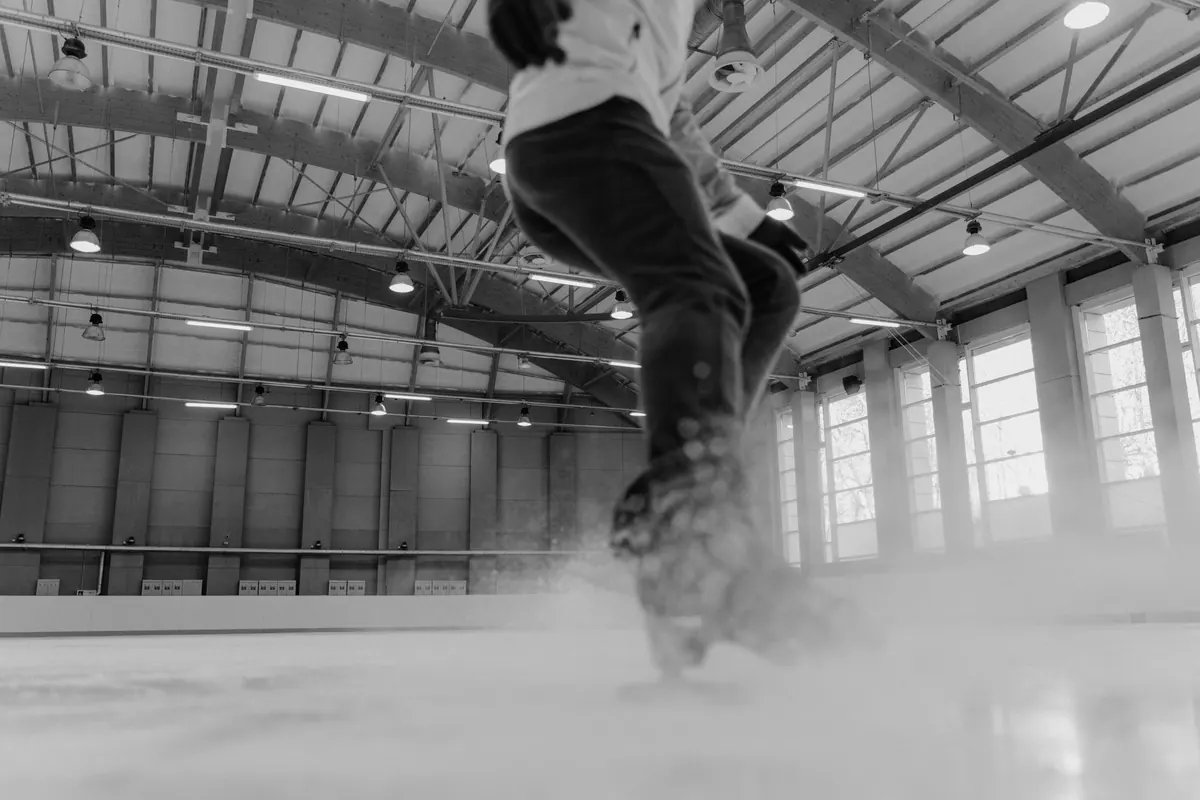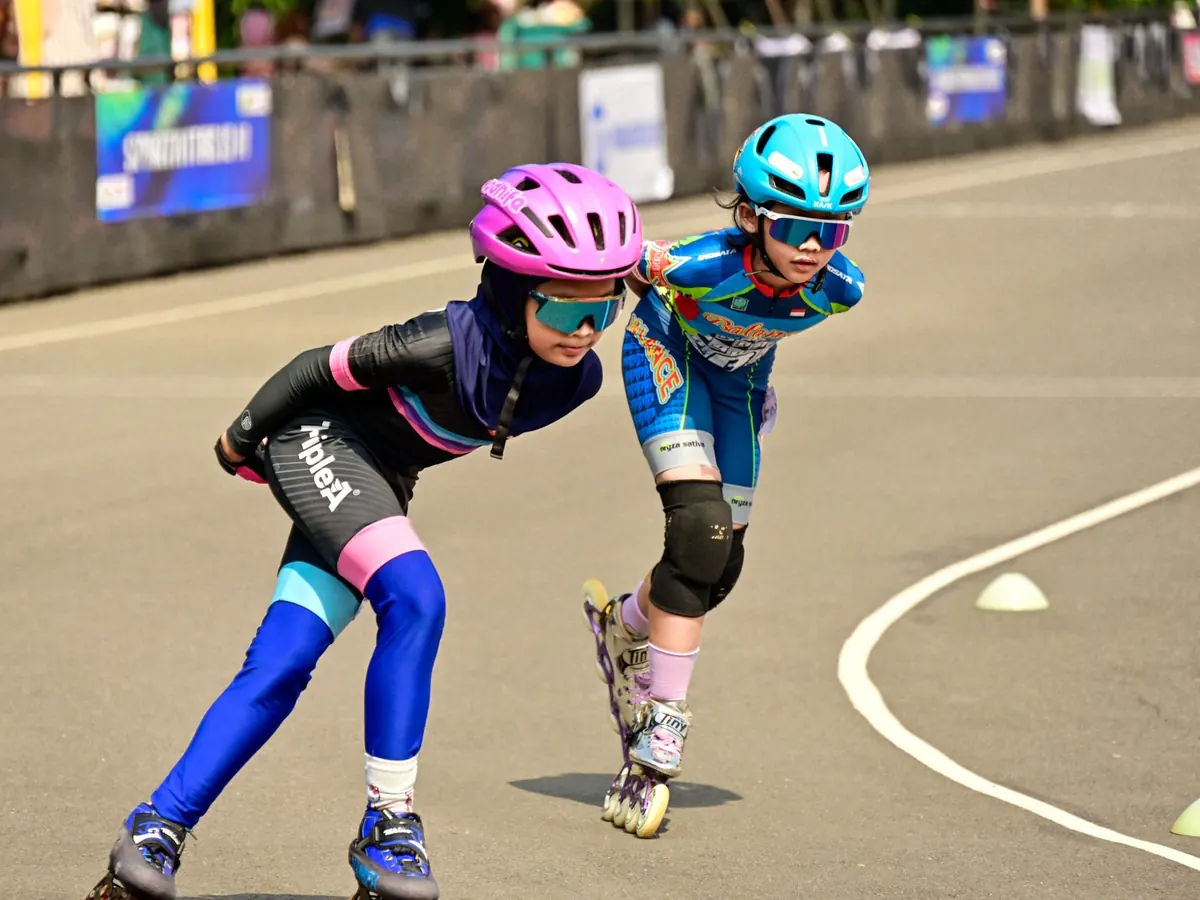
Put a long track skater and a short track skater side by side and they look like cousins at best. Same blade, same low crouch, same glide that seems to lean a little further left than gravity should allow. Then the gun goes, and the two disciplines become entirely different problems: one is a solo argument with the clock on a 400-metre oval, the other a six-person negotiation inside a hockey rink. New viewers often assume short track is simply long track on a smaller rink. It isn't, and once you know where the differences sit, both are far easier to follow.
One Sport, Two Arenas
Long track is raced on a 400-metre oval with two marked lanes, much like athletics. The ice is wide, the sightlines are long, and a single pair of skaters can look almost lonely out there. Elite ovals are often indoors at altitude, where thin air makes for fast times; plenty are outdoors, where wind becomes part of the story.
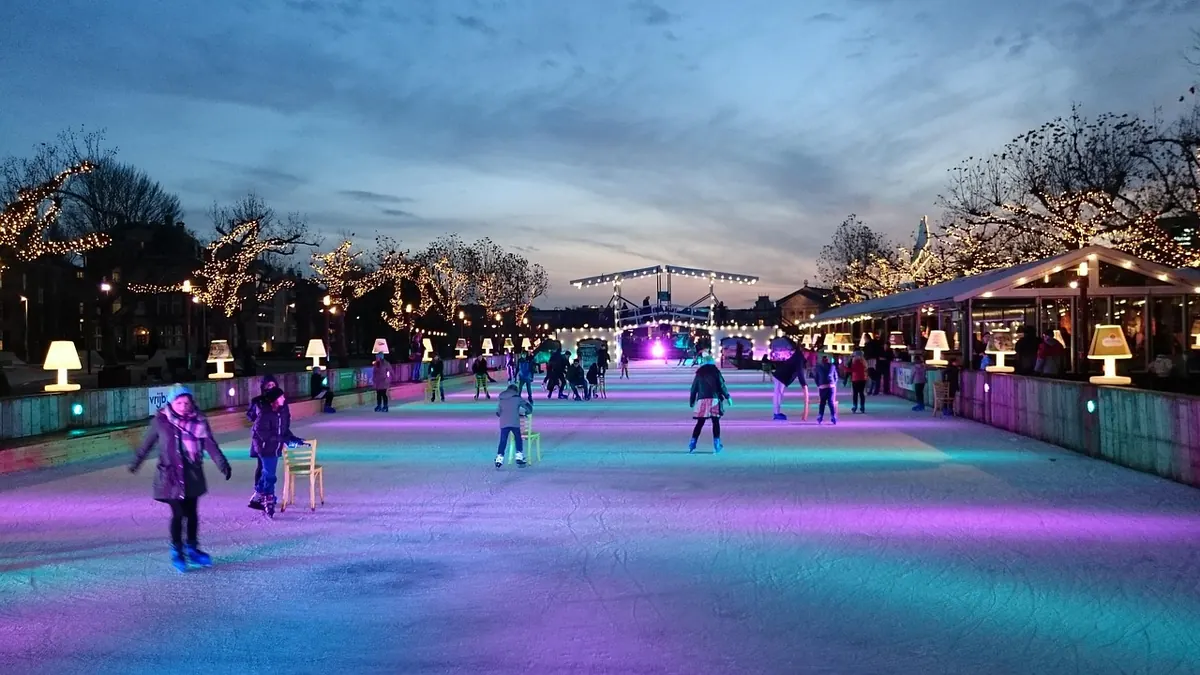
Short track takes place inside a standard hockey rink, roughly 60 by 30 metres. One lap measures 111.12 metres, and the track is marked by small blocks set on the ice rather than painted lines. Because the rink is so compact, the turns are tight, the skaters come within centimetres of the boards, and the whole field is usually within a couple of strides of each other.
That single fact changes how you watch. On a long track oval you can follow the entire race from any seat and judge the gap between a skater and the clock. In short track, the drama is compressed into the space between a skater's shoulder and the block on the inside of the corner.
Skates: Long Blades, Stiff Boots
The equipment explains a lot of what you see on screen, and the two disciplines have pushed their boots in almost opposite directions.
Long track: length and a hinge
Long track blades are long, usually somewhere in the low forties in centimetres, because a longer blade glides better and holds a straighter line. The boot is cut low, leaving the ankle free so the skater can sink into a deep knee bend and extend fully at the end of each push. Most elite skates now use a hinged "clap" blade: the blade stays flat on the ice while the heel of the boot lifts, which keeps the push effective for longer. The hinge arrived in the mid-1990s and was standard at the Olympics by 1998. Racers wear skin-tight suits with a hood; helmets appear only in the mass start, where contact is possible.
Short track: built for corners
Short track boots are stiff and rise above the ankle, because the ankle has to survive four tight left turns per lap at speed. The blade is shorter than a long track blade and mounted off-centre, shifted toward the inside edge, so the boot clears the ice when the skater is leaning at what looks like an impossible angle. Blades sit in adjustable clamps, and skaters tweak them constantly. Helmets are compulsory, along with cut-resistant gloves, knee and shin pads. Watch the left hand: it often rests on the ice through the corner for balance.
How a Race Is Run
Long track is a time trial. Skaters go out in pairs, drawn against each other but really racing the clock, and the fastest time wins. Each lap, the two skaters swap lanes on the back straight so that both cover the same distance; miss the crossover and you're disqualified. The start is staggered for the same reason. The Olympic distances are 500, 1000, 1500, 5000 and 10,000 metres for men, and 500, 1000, 1500, 3000 and 5000 for women, plus team pursuit and mass start. At championships the 500 metres is often skated twice, with the times added together.
Short track is a knockout. Skaters race in heats of four to six, then quarterfinals, semifinals and finals, with the top two usually advancing. First across the line wins, but place matters more than time, and judges can disqualify a skater for causing contact or advance someone who was clearly impeded. Distances are 500, 1000 and 1500 metres, plus relays of 3000 metres for women and 5000 for men, where teammates tag by pushing off the outgoing skater's hips. A mixed relay joined the programme in 2022.
Tactics: The Clock vs. The Pack
Long track rewards even pacing. A skater who opens too fast almost always pays for it in the final lap, and the broadcast split times tell you exactly when a race is slipping away. The paired format matters too: skating behind a rival gives you a small draft, so a well-timed pass on the last lap is worth more than a fast first 200 metres. The lane draw shapes the finish, since the skater assigned the inner lane for the final lap gets the shorter route into the closing corner.
Short track is a positioning game. Leading is expensive: you break the wind for everyone behind you and you cannot see the pass coming. The usual pattern is a patient first half, a surge with two or three laps left, and a last-corner decision — dive up the inside and risk a block, or swing wide and hope the exit is clean. Crashes are part of the sport, and so is the pause after the finish while judges review a pass.
What to Watch, Lap by Lap
A few terms will carry you through a whole evening of racing:
- Crossover: the long track lane change on the back straight, repeated every lap.
- Draft: sitting behind another skater to save energy; vital in both disciplines, decisive in short track.
- Inside line: the shortest path around the corner, and the piece of ice everybody wants.
- Blocks: the small markers that define a short track lane. Hit one and you'll know about it.
- Splits: the on-screen lap times in long track; the fastest way to see who is ahead of record pace.
For a short track final, try watching in this order:
- The start. Whoever gets the inside line first controls the first two laps.
- Laps one to three. Note who settles in second and who drifts to the back.
- Two laps to go. This is where the first genuine move usually comes.
- The last corner. Inside pass or outside sweep — one is braver, one is safer.
- The finish. Check the photo finish, then wait for the judges before celebrating.
A Good First Doubleheader
The quickest way to feel the contrast is to watch one race of each, back to back. Queue up a long track 1500 metres and a short track 1000 metres, and watch the long track race with the split times visible; you'll see a race won or lost in the middle lap rather than at the line. Then watch the short track final once with commentary and once without, keeping your eyes on the skates instead of the faces. The lean tells you who is comfortable and who is hanging on.
If you get the chance to attend, the two venues feel nothing alike. A long track oval is a big, often chilly hall where the sound of a single blade is surprisingly loud; dress warmly and pick a seat near the crossover. A short track arena is loud, warm and tight, so sit near a corner if you can — that's where the passes happen. And keep in mind that plenty of skaters have raced both disciplines seriously, which is why the two are covered side by side. Learn one, and the other starts making sense almost immediately.
Photo: Hera Permata S / Pexels