You can watch two hockey games on consecutive nights and feel like you are watching different sports. In one, bodies slam into the boards, pucks get dumped into corners and every pass seems to happen under pressure. In the other, play flows from side to side, wingers find open ice and a breakout takes three or four clean passes. Same rules, same puck, same six skaters per side. What changes — often without anyone mentioning it on the broadcast — is the size of the rink. A few feet, or a couple of metres, quietly rewrite how the game is played.
The two templates most fans already know
North American professional hockey uses one fixed sheet: 200 feet long by 85 feet wide, with corners rounded at a 28-foot radius. That has been the standard for decades. When people talk about "NHL-sized ice," this is what they mean. In metric terms it is about 61 metres by 26 metres, and the neutral zone, the offensive zones and the goal creases are all sized to fit that footprint.
International hockey works from a range instead of a single number. The IIHF rulebook permits rinks between 56 and 60 metres long and 26 to 30 metres wide. That flexibility is why an Olympic tournament, a world championship and a European league game can all look subtly different from one another — and why the classic 60-by-30-metre sheet of earlier Olympics felt so vast compared with what North American fans were used to. A 60-by-30-metre rink is roughly 197 feet by 98 feet, so it is shorter than an NHL sheet but dramatically wider.
Put the two systems side by side and something interesting appears. An NHL rink is roughly 61 metres long, slightly longer than a 60-metre international rink, but only about 26 metres wide. The biggest difference is rarely length. It is width, and the way four extra metres — about thirteen feet — changes the geometry of everything. Those metres are not evenly distributed in the experience: they show up as extra time on the wall, a longer diagonal for a cross-ice pass, and a wider gap for a defender to close.
Beyond the two big leagues
College hockey in North America has its own history, and several campus rinks are wider than the NHL standard, which is part of why the college game can look more open. European leagues vary too, and some KHL buildings are noticeably wider than an NHL arena. There is no single world standard, only a family of standards sitting within a few metres of each other. Even within one league, older buildings can have quirks — a slightly different corner curve, a bench setup that changes how a coach rolls lines, or a scoreboard hanging low enough to affect dump-ins.
That variation matters for players moving between leagues. A defenceman who learned to gap up on a 26-metre sheet has to recalibrate when the wall is suddenly four metres farther away. A winger who feasted on open ice in Europe may find that his first step is contested on every catch in North America. The rules stay the same; the clock in his head does not.
Why the differences exist in the first place
Most of the answer is buildings, not tactics. A rink is the most expensive part of an arena to change, and it is usually the part decided first. North American arenas were often squeezed onto tight downtown lots or built to a budget where every row of seats counts, which pushed designers toward the narrower sheet. If you are building a multi-purpose arena in a city where land is expensive and hockey shares the calendar with concerts and basketball, a narrower rink means more seats close to the action and less concrete to pour.
In Europe, hockey grew up alongside bandy and outdoor skating, with more room and different expectations about how the game should look. Many rinks were built in smaller cities where land was less expensive, and the wider international sheet was already the local norm. Tradition did the rest. Generations of players learned on one size of ice, and coaching ideas followed. A country raised on wide ice develops systems built on patience and passing. A country raised on narrow ice develops systems built on pressure, contact and quick decisions. Neither is better. They are answers to different questions.
What a narrow rink does to speed and space
The most useful way to think about rink width is as a timer. On a narrow sheet, a defender stationed in the middle of the ice is closer to both walls, so he closes on a winger faster. That winger gets less time to receive a pass, look up and pick a play. Multiply that by sixty minutes and you get a game of constant hurry. The same principle applies in the corners: a forechecker arrives sooner, a puck battle starts earlier, and the "window" for a clean exit disappears.
Narrow ice also shrinks the passing lanes. Cross-ice passes at the offensive blue line become riskier because a stick or a shin pad is more likely to be in the way. That pushes teams toward short support passes, chips off the wall, and dump-ins when nothing else is available. Contact rises because there is less room to avoid it, and shots tend to come through traffic rather than from clean looks. A power play on a narrow rink often looks less like a shooting gallery and more like a fight for a single seam.
None of this is a rule. It is an incentive. Given less room, most players choose the lower-risk option, and the game compresses. Coaches on narrow ice tend to value players who win races, absorb hits and make the simple play under pressure. The highlight-reel skill is still there, but it has to happen in a phone booth.
What a wide rink does to spacing and tactics
On a wide sheet, the timer runs slower. A winger on the wall has an extra half-second — maybe a full second — to scan the ice, and that is enough to turn a panic pass into a planned one. Defenders have farther to travel to close gaps, so a quick lateral pass can open a lane that would have been slammed shut on a narrow rink. The game starts to look more like a possession sport and less like a race to the next collision.
That extra space also changes how teams break out of their own zone. On wide ice, a defenceman can retreat behind the net, draw a forechecker, and make a longer diagonal pass to a winger who is already moving. On narrow ice, that same play often dies because the forechecker is on top of him before the pass arrives. Wide ice rewards patience, but it has a trap of its own: if a team stands still, all that space becomes perimeter passing with no one driving the middle. The best wide-rink teams use the extra room to change angles, not to avoid contact.
Special teams shift too. A wide rink gives a power play more room to run an umbrella, with the point men walking the line and the half-wall players trading places. Penalty killers have to cover more ground, which can create seams — but only if the power play moves the puck quickly enough to make them travel.
How to spot the difference on TV
You do not need a tape measure to tell which rink you are watching. These cues usually give it away:
- Board battles: On a narrow rink, wingers are often pinned to the wall within a second of receiving the puck. On a wide rink, they have room to turn and skate away.
- Cross-ice passes: Long east-west passes at the blue line are more common on wide ice because the lane is less crowded. On narrow ice, those passes are highlights, not habits.
- Defensive gaps: Watch a defenceman lining up a rushing winger. On narrow ice, he can step up sooner. On wide ice, he has to respect the outside lane longer.
- Camera feel: A wide rink can make the far side look distant and the players look smaller. Broadcasters often need a higher or wider camera to keep the play in frame.
- Goalie movement: More lateral passes mean goalies on wide ice are tested side to side more often. On narrow ice, they face more screens and rebound scrambles.
Does size change scoring, safety, or entertainment?
Not in a simple, one-direction way. Wider ice tends to reduce raw body contact because there is more room to avoid it, and it can open up passing lanes. But it can also encourage teams to play on the perimeter, and a game with lots of space but little traffic can be less dramatic than a tight, physical battle on a narrow sheet. Scoring rates depend on coaching, goaltending, power-play efficiency and rule enforcement as much as on the dimensions.
Safety is similarly complicated. More space can mean fewer collisions, but it can also mean players build up more speed before they meet the boards. A clean hit on wide ice can be a long way from the bench and a long way from help. League officials have debated widening NHL rinks for years, but the barrier is practical: changing the sheet means changing the building. Seats would be lost, sightlines would shift, and the cost would fall on owners who already have a fixed asset. That is why the NHL has mostly stayed at 200 by 85 feet while international hockey has kept its range.
The debate is not really about which rink is "better." It is about what kind of game you want to watch. Narrow ice produces urgency, contact and quick decisions. Wide ice produces spacing, skating and longer sequences. Most fans, once they notice the difference, find they enjoy both — and they start seeing the rink itself as part of the tactics, not just the background.
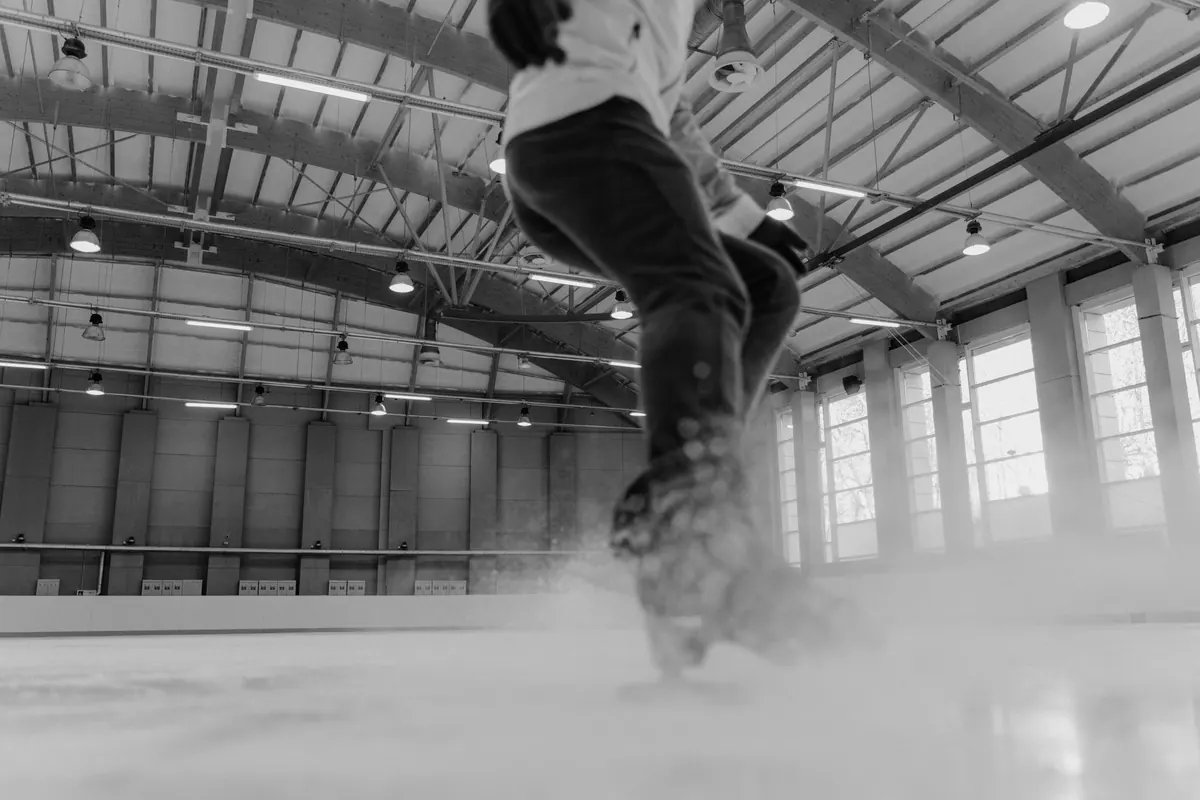
Photo: olegng / Pixabay